
How to track karting progress beyond the fastest lap
A practical guide for karting parents and adult drivers: compare sessions fairly, record learning and use a free printable progress-review worksheet.
Get the free resource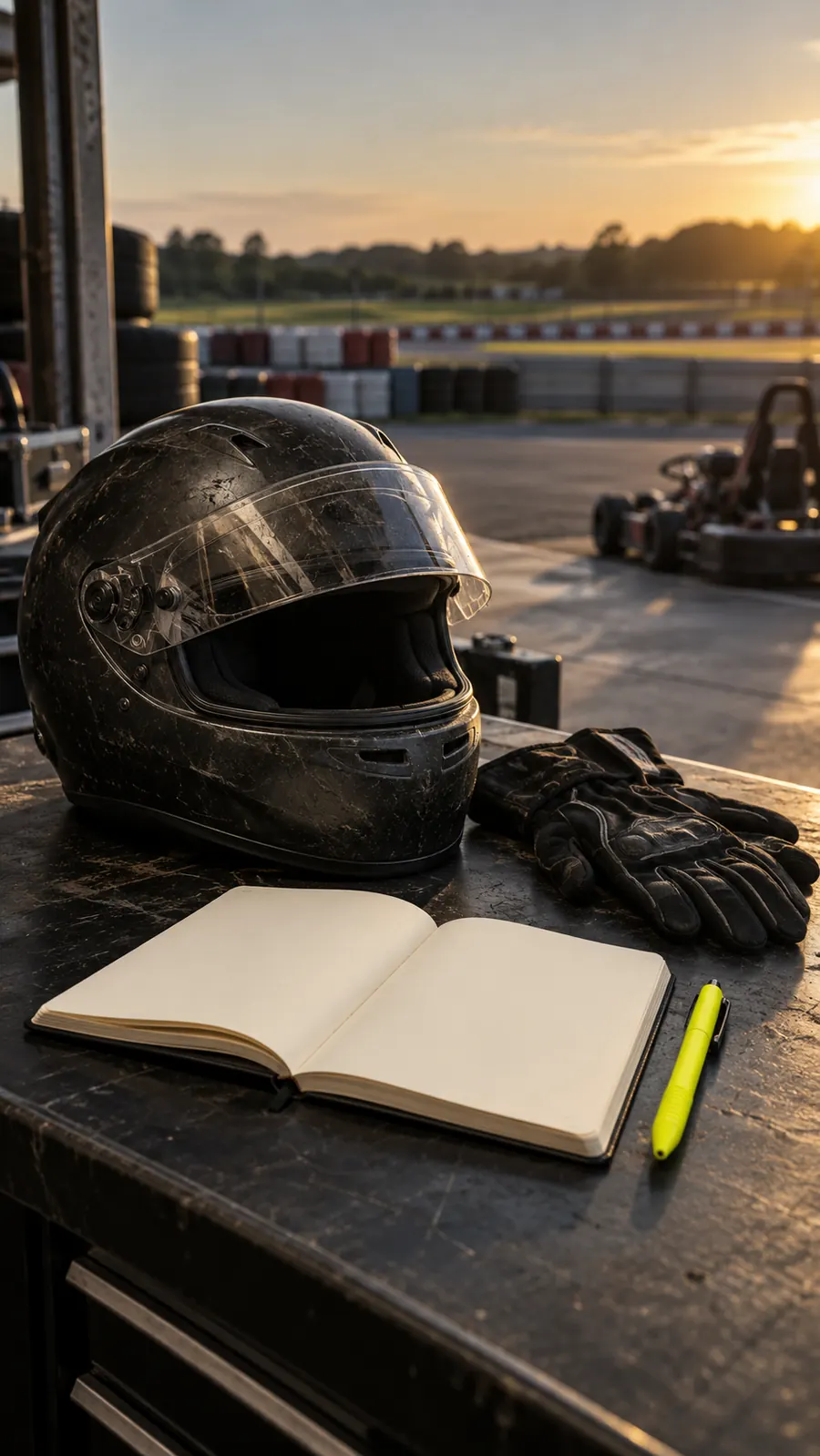
Track the questions a driver can answer, the feedback they return to and the context behind the laps. Progress is a conversation supported by evidence, not a talent score.
Take it to the track
Free to use. No account or email required.
Choose a small set of things to notice
A personal-best lap is easy to remember. It is less useful for explaining what a driver understood, whether they could repeat an observation or how they responded to feedback. A progress record can hold lap data and learning without turning either into a judgment of potential.
Choose questions with the driver and their coach, where one is involved. These are discussion prompts, not a universal assessment scale or a ranking against other children.
- Area
Preparation
- Useful question
- Can the driver explain today’s focus?
- Evidence to keep
- Their own short description before the run.
- Area
Observation
- Useful question
- What did they notice and where?
- Evidence to keep
- A session-specific reflection in their words.
- Area
Feedback
- Useful question
- What did they understand from the coach?
- Evidence to keep
- Named, reviewed feedback and the driver’s response.
- Area
Continuity
- Useful question
- What did we revisit from last time?
- Evidence to keep
- Previous focus beside the new observation.
- Area
Timing
- Useful question
- Are these laps comparable?
- Evidence to keep
- Timing source, layout and session context.
Make a comparison before making a claim
Put two session records beside each other. Check layout, class, kart, conditions, timing source, tyre context and traffic. Write down known differences before looking for improvement. If something was not recorded, say so.
A faster lap does not establish that a setup change caused it. Several things can change between runs. Distinguish the observation (‘the recorded best lap was lower’) from the explanation (‘this change made it lower’).
Comparisons with other drivers need even more context and appropriate permission where records are shared. For a family record, the useful comparison is often the driver’s original question and what they can explain afterwards.
Review a few sessions together
- Choose a manageable period, such as the last three practice days. Avoid selecting only days that support the story you want to tell.
- Read the original focus and driver reflection from each day. Keep the driver’s view separate from the observer’s and coach’s views.
- Find one thing the driver can explain more clearly, one recurring question and one gap in the record.
- Ask the coach which pattern matters. A repeated note is a prompt for review, not a diagnosis.
- Choose one next focus and record who agreed it. Let the driver help shape the conversation in a way appropriate to their experience.
Keep the record useful to the driver
Use concrete descriptions: ‘explained the next focus before the run’ is clearer than ‘showed great talent’. Give the driver room to disagree with a summary or say they do not remember. Correct the record while keeping the source of the correction clear.
Do not turn every outing into an assessment. Decide together when to reflect and what is worth recording. The worksheet should support a conversation, not become a permanent verdict about ability or a future career.
Adult drivers can use the same routine for their practice and decide when to involve a coach. Unleash’s family and self-managed driver workspaces are forthcoming; the free worksheet and training log work independently today.
Keep the learning connected.
The Unleash family and independent-driver workspace is forthcoming. Explore early access and see how recorded sessions can support the next conversation.